
News
Natalia Trayanova to receive Heart Rhythm Society’s Distinguished Scientist Award
Read about her award from the Whiting School. Read more…
Read about her award from the Whiting School. Read more…

The award recognizes individuals who have made major contributions to the advancement of scientific knowledge in the field of cardiac pacing and/or cardiac electrophysiology.
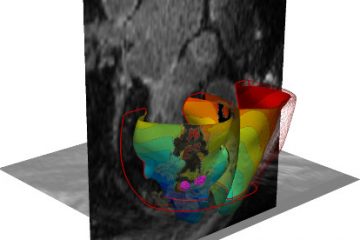
FDA just approved our 160-patient randomized clinical trial to demonstrate the utility of computer simulations driving atrial ablation procedure in patients with persistent atrial fibrillation and fibrosis. The approach is termed OPTIMA (OPtimal Target Identification via Modeling of Arrhythmogenesis). The PIs are Drs. Trayanova, Calkins, and Spraag — clinicians and Read more

ADVANCE co-director, Natalia Trayanova, PhD, discusses the key developments in precision cardiology in the December 2018 edition of Nature Reviews Cardiology. From a wearable electrocardiogram patch that may reduce the risk of stroke to a personalized virtual heart model that can direct treatment of infarct-related ventricular tachycardia, Trayanova highlights several high-impact advances Read more

Members of the Alliance for Cardiovascular Diagnostic and Treatment Innovation (ADVANCE) and key Johns Hopkins leadership gathered to celebrate the launch of ADVANCE, the new interdisciplinary research center between the Whiting School of Engineering and the Department of Medicine that is posited to revolutionize the diagnosis and treatment of cardiovascular Read more
In a new $5.5 million center that spans engineering and cardiology specialties at Johns Hopkins, experts aim to improve the diagnosis and treatment of heart rhythm disorders that affect millions of people by leveraging innovations in cardiac imaging, computer simulations and data science. The new center, called the Alliance for Cardiovascular Read more

Drs. Trayanova and Calkins received a $3.15 million grant from NIH grant to develop improved ablation targeting strategies for ablation of persistent atrial fibrillation in patients with fibrotic remodeling.
Members of the ADVANCE team report they have successfully created personalized, 3-D virtual simulations of patients’ hearts for doctors to visualize and perform a life-saving procedure that corrects irregular or rapid heartbeats.